Tuesday, April 28, 2020

Twitter and Diffusion of Innovation

Twitter Success Tips

Twitter is one of the most used social media platforms up to date. Twitter is used by the common citizen, celebrities, politicians, and companies all over the world. Twitter is most commonly used to spread news, publicly stating our opinion, and commenting on other people's tweets. Twitter blew up when marketing companies realized that social media was an up and coming way to market their brand. It was the easiest way to reach people and get them to notice your product. One retweet from the right person and hundreds of thousands of people will see the tweet. 

Twitter then became one of the best ways to spread the news about your product or program. While this can be a good thing, there is also a negative side when it comes to a less professional account. You can tweet pretty much anything you want, without consequences, unless the wrong person were to see it. Next thing you know, thousands are seeing something that they could take out of context and get offended and use against you to ruin your reputation and your company's reputation.

It's great that twitter is used as a resource to state your opinion, but it's important to remember words can be twisted and interpreted wrong. It's a great way to feel personally connected to people, but not everyone is actually what they seem to on the internet. Specially twitter. 


The Most Important Value of Free Expression


Understanding the Theory of 'Marketplace of Ideas' With Examples ...
While all the values listed in the "Eight Values of Free Expression" are important when it comes to our first amendment right as American citizens, I can't help but think that there is one value that's more important than the other. The marketplace of ideas value, in my opinion, is the basis of the other values, and our freedom of speech as citizens. This value focuses on the fact that the truth will always prevail, when in the right.

Without the freedom to speak our truth, we wouldn't have not only individual identities, but no identity in our country, which prides itself on being "The Land of the Free”. The article called Marketplace of Ideas explains that “marketplace of ideas refers to the belief that the test of the truth or acceptance of ideas depends on their competition with one another and not on the opinion of a censor, whether one provided by the government or by some other authority” (Marketplace of Ideas, MTSU.edu). This explains that people have the chance to prove their truths to be correct, giving those the opportunity to express their truths. This allows not only good discussion, but the want and need for people to express their beliefs. 

The marketplace of ideas is beneficial to all the other values listed that make up our freedom of speech and expression. This can relate to participation in self government, because without the marketplace of ideas politicians and campaigns would not be able to speak their truths and base their marketing on any core beliefs. This allows them to come up with their own ideas and speak their opinions, drawing more attention and participation from citizens. In accordance to Stable change, people being able to speak their frustrations and issues out results in less violence and more targeted/beneficial discussion.

By being able to speak their truths, citizens are able to create their own identity. This aligns with the value of individual self-fulfillment. The marketplace of ideas also plays a big role when it comes to the value of checks on governmental power. Without expressing our truths on what we believe the government is lacking, there would be no accountability or change. Promoting tolerance is affected by the marketplace of ideas, because it helps us recognize hate speech and speak out against it. It promotes innovation by letting us compete and speak out on our truths and ideas that we feel would benefit society. Finally, it enables us to protect dissent, which allows us to not only disagree against the government, but speak out on what we feel they can do better.


Wednesday, March 4, 2020

The History and Impact of Netflix

Netflix was created in 1997 by Reed Hastings and software executive Marc Randolph. Netflix's original purpose was to offer online movie rentals to the general public. In 1998, Netflix launched the first DVD rental and sales site, netflix.com. Netflix then debuted a subscription service, offering unlimited DVD rentals for one low payment a month. By the beginning of the 21st century,  Netflix introduced a personalized movie recommendation system, which uses Netflix members’ ratings to accurately predict choices for all Netflix members. In 2003, Netflix hit 1 million members. Netflix issued a patent by the U.S. Patent & Trademark Office to cover its subscription rental service and several extensions. Netflix then grew to 5 million subscribers in 2006. With the evolving world of technology, Netflix introduces streaming, which allows users to watch TV shows and movies directly from their laptops. In 2008, Netflix partners with different consumer electronic companies, like PS3 and other internet connected devices. Starting in 2010, Netflix becomes available on the Apple iPad and iPhone, as well as the Nintendo Wii. Netflix expands farther than the US, starting in Canada. Netflix debuted in Europe, and won its first Primetime Emmy Engineering Award. With its growing popularity, Netflix premiered its first original stand-up special, "Bill Burr: You People Are All the Same." By 2016, Netflix is in over 130 countries, and has a multitude of original shows and movies, including  "House of Cards," "Hemlock Grove," "Arrested Development" and "Orange Is the New Black." Netflix started to win awards for their original shows, winning its first Academy Award when "The White Helmets" receives the award for Best Documentary Short Subject. Netflix continues to dominate award winning as time goes on. By 2019, Netflix had won four Academy Awards, including Best Director, Best Foreign Language Film and Best Cinematography for "ROMA," and Best Documentary Short Subject for "Period. End of Sentence." Netflix continues to be the number one streaming device used all over the globe, and adds different shows and movies monthly. 
Netflix has had positive and negative impacts on today's society. Netflix, while convenient and efficient for at home movie watching, movie theater sales have gone down. Many people would rather pay $10-$15 a month than go to a movie and spend $20-$30 per person at the movie theaters one time. Netflix has also caused companies to go out of business, one being blockbuster. Because of Netflix being at our fingertips, people spend on average 1 hour and 36 minutes a day watching netflix, while only spending 36 minutes with family members. While Netflix has been beneficial to our movie watching, it also has caused less interaction in our society.
Image result for netflix


source: Sobre a Netflix

Progressive Era

The Progressive Era started in 1907 with the first court case dealing with a journalist, Patterson vs Colorado. The journalists were sick of being thrown and jail and their first amendment right being taken advantage of. In 1915 a case about a movie where Lincoln was assassinated came to the courts when the film caused fist fights in ohio. The film was banned and the film company sued, claiming it was a prior restraint. Prior restraint is when the government stops you from speaking or writing before you have even done it. This causes subsequent punishment - when the government punishes you after the fact. The reasoning for the defence is speech action dichotomy, claiming that speech is protected under the first amendment, and action is not. This makes the film not protected under the first amendment. Journalists, movie creators, and those who wished to express their first amendment rights started to use expressive action, which is an action that has an expressive message to the public. In 1917, the US entered the war, and the US espionage act passed. In 1918, the sedition act was created, which made it a crime to talk bad about the government. This imposes on the first amendment right citizens have to speak freely. Many said the government violated the first amendment, and because the government didn't agree, they were thrown in jail. During the progressive era, the limits of the first amendment were tested in a multitude of ways.


From an undated William Jennings Bryan campaign print, "Shall the People Rule?" Library of Congress.

Tuesday, March 3, 2020

Facebooks Invasion of Privacy

Facebook’s latest privacy bug is just one in a string of issues. Facebook's lack of privacy and invasion on personal data has left millions of users feeling violated and untrusting of the popular social media network. Since 2018, facebook users have dealt with different issues and bugs contracting personal data and pictures that were uploaded but not posted. Many different instances have been reported where facebook or other companies used facebook to extract this data. One example is Cambridge Analytica improperly taking personal facebook data of 50 million people in order to profile and target users for political advertisements. Another example is the lack of facebook security enabled hackers to access and steal personal information in nearly half of 30 million accounts.
Not only are hackers misusing and stealing information, but facebook itself has also been accused many different times of taking and benefitting from users information. There was an incident when facebook staff did discuss selling access to user data to advertisers. The company was also accused of collecting text messages and phone call records through smartphone apps without consent. 
Social media companies should be restricted in what data they are and aren't allowed to use. If it already isn't, it should be illegal to obtain information without consent. When I go online and use facebook, I shouldn't have to worry about outside sources or facebook itself taking my information and using it to benefit them. Hopefully facebook, along with other social medias, can respect our privacy in order to not lose customers.


Source: https://www.theguardian.com/technology/2018/dec/14/facebook-privacy-problems-roundup 

Civil War and Reconstruction Era

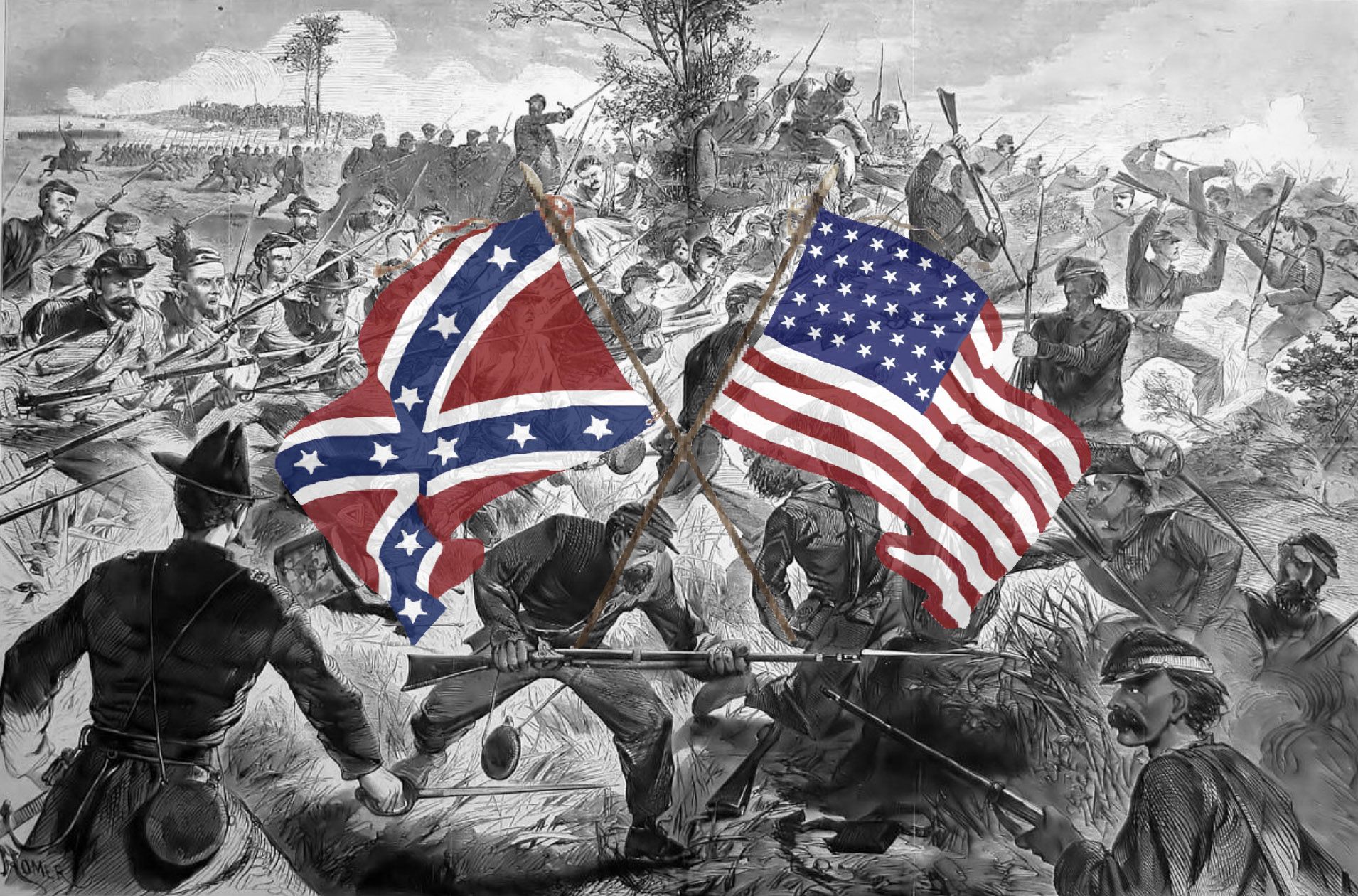
From 1619 to 1864, the United States was known as a slave country. Majority of men who owned land also owned slaves. In 1857, Dred Scott argued that if he was in a state where slavery was illegal, then he was not a slave. The judge said that he was a slave and not a citizen, despite the states laws. This started to stir an issue among the public, and creating a division between the north and the south. When President Lincoln was elected in 1860, he suspended Habeas Corpus, which means the government cannot arrest a citizen without a reason. Lincoln’s election also created a war on the press, because of his attempts to suppress anti-war voices. The civil war officially started in 1861 in Fort Sumter. In 1863, the emancipation proclamation was created, making it clear that the civil war was about slavery, not states rights. The Reconstruction Era started when the ending of the civil war and the 13th amendment in 1864. The ratification of the 14th amendment in 1865 made African Americans citizens. There were 3 clauses/freedoms to the 14th amendment: privilege, due process, and equal protection clause. In 1870, the 15th amendment was created to give African Americans the right to vote. The Civil Rights act in 1875 banned discrimination in public areas. In all of these cases, freedom of speech and the first amendment were important in order for people to speak their minds about discrimination and equal rights.


Image result for civil war picture


Credit: Notes via Prof. Smith

Sunday, March 1, 2020

The Founding Era

Image result for founding fathers

In class, we talked about the Founding Era that occured from 1619-1808, and its relevance, as well as its importance, to the first amendment. In 1619, there were two major things that occured to note take note of. First, the founding of Jamestown took place. Second, the first slave trade begins. 1776 brings us to the Declaration of Independence and Revolutionary War. When the colonists won the war, all complaints listed in the Declaration were addressed with solutions in State Constitutions. 
When creating american democracy, the colonists wanted to insert certain things to keep the new government, whatever it may be, from ever gaining too much power. They wanted the state and federal governments to have a give and take system, creating a limited government. They also created enumerated powers, which consisted of a stated list of certain powers. If the power is not on there, the government does not have it. In 1782, the Articles of Confederation were created as a first attempt at a Constitution. With this, state governments would have a lot more power, and the federal government must share. The idea of federalism internally divided the government and the state, creating vertical checks and balances. With the failing of the Articles, the federalists created Constitution that would become hard to change. With this, the anti-federalists wanted to ensure the rights of the people, so they wanted to include the Bill of Rights. With this comes the first amendment, ensuring freedom of speech. This is important because it ensures the right of the people to say what they want about whatever they want. In 1878, 3 compromises were created: the 3/5ths compromise, 20 year rule, and the fugitive slave clause. In 1803, the results of Marbury vs Madison led to judicial review, which gives the Supreme Court power to review all actions of department and are able to deem them constitutional or not. When the slave trade ended in 1808, the Founding Era came to an end as the Civil War era started.

Wednesday, February 12, 2020

First Amendment in Political Communications

With a major of strategic communications looking to focus in political communications, it is important to know and take advantage of your first amendment rights. Story Partners, the location of my internship this summer, is a public affairs agency in DC. They exercise their first amendment right in a multitude of ways. One thing that they do is create different platforms to express their opinions on different political topics. This is crucial to their jobs, as they work in DC, being directly involved in politics.

“Inside Story”, a digital thought leadership platform covering issues that are shaping policy debates in the nation's capital and around the globe, is a great example of how they exercise their first amendment rights. Gloria Dittus, Chairman of Story Partners, wrote an article talking about data privacy protection in the United States. She writes specifically on the California Consumer Privacy Act, explaining it as “the first data privacy law of its kind in the U.S. Enactment of the CCPA follows the implementation of similar data privacy legislation in the European Union titled the General Data Protection Regulation (GDPR), which went into effect in 2018”. She further explains that consumers are concerned over data privacy and the protection of their personal information without their knowledge on these different sites. Gloria also writes other articles about adapting to the progressing work field, the nationwide shift to clean energy, and on how Infrastructure investments keep Americans safe. Gloria continues to exercise her first amendment rights when talking about politics.

Image result for story partners